Live streaming services in Singapore
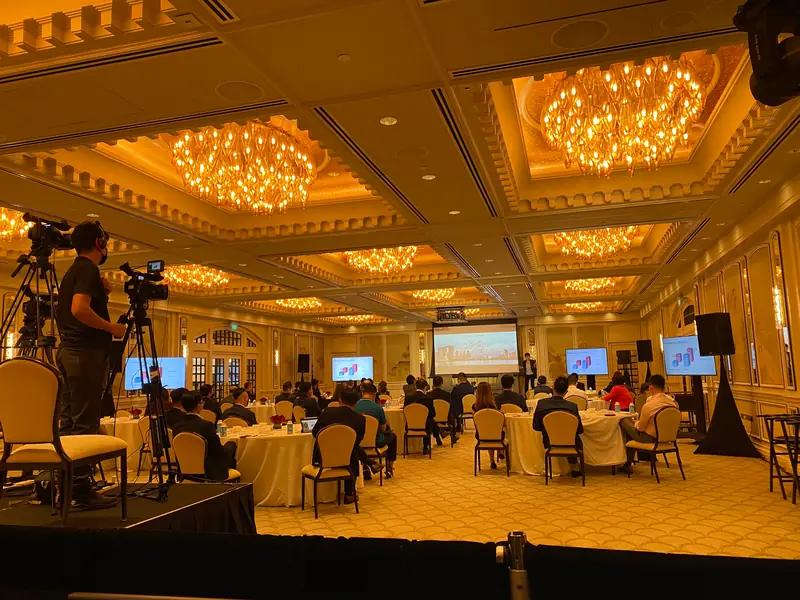
Almost every unwatchable event stream fails for the same reason, and it is not the picture. It is that the audio was taken from a microphone on a camera at the back of the room, so remote viewers heard the room rather than the speaker: air conditioning, cutlery, the people at table four, and somewhere underneath all of it, the managing director.
Remote viewers should get sound from the desk. Everything else about a stream is a preference; that part is the difference between people staying and people leaving.
Two mixes, not one
A room and a stream want different things. The room needs reinforcement, which is to say the parts of the sound that are not already loud enough in the space. The stream needs everything, because a remote viewer has no room to hear. A single mix serving both is a compromise that is audible at one end or the other.
So the stream gets its own clean feed off the mixing desk, with video audio handled at matched levels rather than arriving louder than the speech around it.
How many cameras
One camera, locked wide or operated, with desk audio, is honest and sufficient for an internal recording. Nobody watching a town hall recording afterwards needs cutaways.
Two or three cameras with live switching is a different product, and what it buys is attention: a wide, a close on the speaker, and the slide feed cut into the programme so remote viewers read the deck at full size rather than squinting at a screen filmed from across a ballroom. Lower thirds go in the same programme, which means names on screen without anyone holding a card.
The slide feed is the part most often left out and most often missed. A remote audience watching a filmed screen is watching the worst version of the content.
The connection is the risk
A wired venue line is the right answer when it can be tested in advance. Not on the day, in advance: venue internet is frequently shared, sometimes shaped, and occasionally on a different floor from where you were told.
A bonded or secondary mobile path is the fallback, and it earns its cost on the one occasion the wired line does something unexpected twenty minutes before doors. Where the stream is the deliverable rather than a convenience, both should be in the plan.
Remote speakers are a rehearsal problem
Bringing someone in from outside the room is straightforward technically and awkward in practice. They need to be on the room's screens and through the room's sound, they need to hear the room well enough to answer a question, and the room needs to hear them without feedback.
What makes it work is a rehearsal slot before doors with the actual remote speaker on the actual connection. A test with a colleague on office wifi proves very little.
What moves the price
Camera and operator count, the recording deliverables, and whether editing follows the event. A single locked camera with a raw file at the end sits at one end; three cameras, a switched programme, a private player and an edited cut-down sit at the other. Both are legitimate; they are just different jobs, and the brief should say which one it is.
What to send us
The venue and room, the platform the stream is going to, whether there are remote speakers, what you need afterwards as a file, and the running order. We will tell you what the venue's connection needs to be able to do and what the fallback costs. See hybrid and livestream for what a standard setup includes, and the equipment list for the camera and audio side.
Send the venue, the platform and the running order, and we will come back with the camera and audio plan, and what the connection has to carry.