Simultaneous interpretation in Singapore
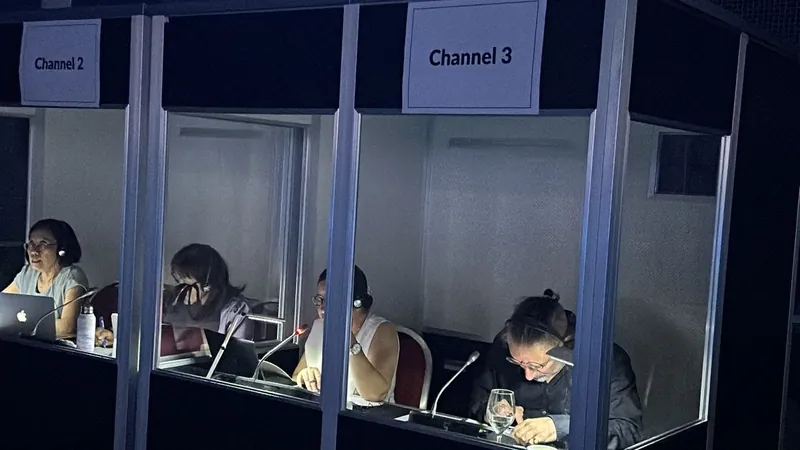
Two different things get booked under the same words, and conflating them is the usual reason a multilingual event runs into trouble late.
One is the interpreters: the people doing the work, booked through a language agency, chosen for the language pair and usually for the subject matter too. The other is the equipment and the room: the booths they sit in, the receivers the audience listens on, and the audio path that gets the speaker's voice into their headsets cleanly. GMP AVL supplies the second. We do not supply interpreters, and an organiser who books us expecting people will be short of people.
What follows is the second half, which is the half that has to be designed into the room rather than added to it.
What the booth is actually for
An interpreter speaks continuously while the speaker is speaking. Without an enclosure, the room hears two voices at once and the interpreter hears themselves over the person they are translating. The booth exists to stop both: it keeps their voice out of the room, and it keeps the room out of their headphones.
That is also why a booth cannot simply go wherever there is a gap. It needs to be somewhere the interpreter can work for hours, which usually means the back or the side of the room, away from the speakers and out of the main sightlines of the audience.
One channel for each language
Each language runs on its own channel, and the audience listens on receivers with headphones, choosing the channel they want. Two languages means two channels, two booths and enough receivers for the part of the room that needs them.
Receiver count is worth settling early and honestly. It is not the headcount, it is the number of people who will actually listen in another language, and getting it wrong in either direction is visible on the day: too few and people share, too many and you have paid for boxes that sat in a case.
The feed the interpreters hear
The single most common fault is an interpreter working from a microphone that is picking up the room rather than the speaker. They need the same clean feed the recording gets: the floor microphones off the mixing desk, at a consistent level, with the video audio handled at matched levels rather than arriving forty percent louder in the middle of a showreel.
This is the point where interpretation stops being a separate hire and becomes part of the sound design. If the speech reinforcement in the room is right, the interpreters' feed is usually right as a consequence. If it is not, no amount of booth quality rescues it.
Sightlines are not optional
Interpreters work from more than audio. They read the speaker, and they read the slides, because a name or a figure on screen is often the thing that disambiguates a sentence. A booth facing a wall, or one positioned behind a pillar, makes the job materially harder.
Where the room cannot give a direct line to the stage, the answer is a monitor in the booth carrying the programme feed. Worth raising while the layout is still moving, because it changes the cabling run.
Floor space, power and access
Booths take floor area, they take power, and they take a route in. That floor area is almost always space the seating plan has already allocated, so the earlier it is known, the less painful the conversation. The same load-in questions that govern any build apply here: the route, the lift, and the window the venue gives you before the room has to be clear.
Crew and the rehearsal slot
A room with live speech needs an audio technician for the whole event, and interpretation adds channels to manage rather than removing any. Build in time before doors for the interpreters to test their feed and their sightline while there is still room to move something. Finding a dead channel at the opening address is a different problem from finding it at four in the afternoon.
When to raise it
Two to four weeks is comfortable for a standard conference, and interpretation should be part of that conversation rather than added to it later, because it moves the floor plan. Year-end and AGM season book out earlier than people expect.
What to send us
The venue and room, the layout, how many languages, roughly how many people will listen on each, whether the event is also being recorded or streamed, and the running order in whatever state it exists. We will come back with the booths, the receivers and the audio path priced as one thing. The equipment list covers the microphones and speaker systems the feed comes off.
Send the venue, the languages and the layout, and we will come back with the booth positions, the receiver count and what the room needs to carry it.