AV for a dinner and dance in Singapore
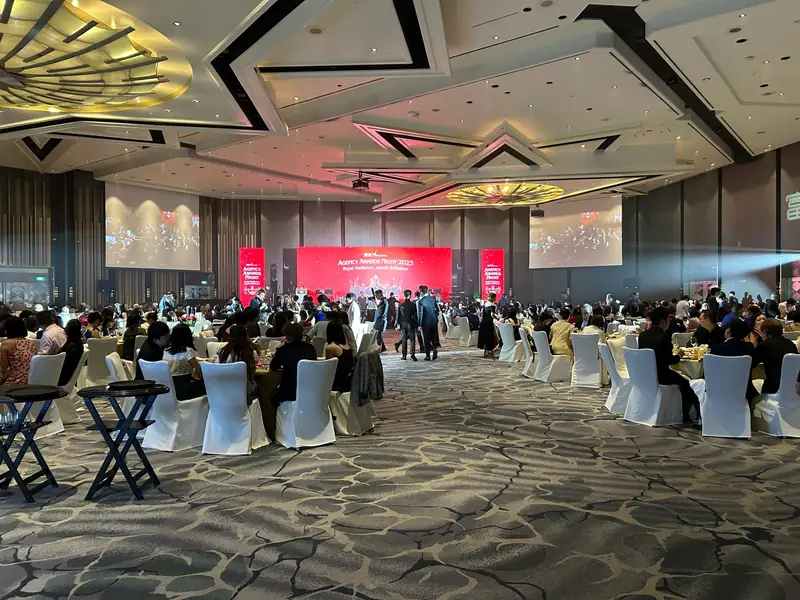
A dinner and dance is the corporate event where the AV is judged hardest, and not by the organiser. Everyone is seated for four hours, facing the same direction, with nothing else to look at. A conference audience forgives a thin PA because they are there to work. A ballroom full of colleagues at their own company's night out does not.
This is the AV side only. The shape of the night, the venue and the run sheet are a separate problem, and a good event company will already be handling them.
Sound is two different jobs on the same night
Speeches and a live band are not one system sized once. Speech asks for intelligibility and even coverage, so that the table furthest from the stage hears the managing director as clearly as the front. Music asks for headroom and low end, which means more boxes, more power and usually subs on the floor.
A room that has both has to be specified for the harder of the two, not the average of them. The common failure is a rig sized for speeches that then has to carry a band at nine o'clock, and everyone can hear that it is working too hard.
Worth knowing what the room itself does before anyone counts speakers. A carpeted ballroom with a low ceiling and draped walls absorbs a great deal. A hall with hard floors and glass gives it back late enough to blur speech. The same boxes behave differently in the two.
Screens are read from table 30
The slides at a D and D are usually the ones that matter most: the awards, the photographs, the video from the year. Screen size follows the furthest seat rather than the stage, and the check is the same one any room gets, which is whether a name on an award slide is legible from the back tables.
Ambient light decides the technology. A ballroom with chandeliers that will not fully dim wants an LED wall, because it makes its own light. A function room that can be brought down does fine on fast-fold projection at a fraction of the cost. That decision should be made while the seating plan can still change, because a wall needs floor depth behind the stage.
The room has to photograph
More photographs are taken at a dinner and dance than at any other corporate event, and most of them are taken by guests on phones. Lighting is what decides whether those pictures look like an event or like a function room with the house lights on.
Uplighting around the perimeter, set to a brand colour, is the cheapest change with the largest effect on how a room reads. Beyond that, stage wash matters for a specific reason: if the night is being recorded or streamed, faces have to read on camera, and a stage lit warm against a room lit cool gives the camera two whites to choose between.
Moving heads earn their place on a night with distinct segments, which a D and D has: a walk-in, a dinner, an awards block, and a band. They do not earn it at a straight conference.
The parts of the night that catch people out
- Roving microphones. Awards mean handhelds passed between people who hold them differently, on a stage with a band's monitors already live.
- Walk-in and playback. Music from the moment doors open, video at matched levels, and a countdown that actually counts down to something.
- The emcee's handover. The most common dead-air moment of the night is a microphone that was muted for a video and never brought back.
Load-in, and why the ballroom is the constraint
Most ballrooms are running something the day before and something the day after. What decides the build is the window the venue gives you, the load-in route, the lift, and the dock booking. A wall that can be built overnight is a different job from the same wall going up in four hours on the morning of the event.
When to book
Two to four weeks is comfortable for a standard conference. Year-end dinners are not a standard conference: they cluster into a few weeks, and the good crews and the ballroom load-in windows go first. If the date is confirmed, the AV conversation is worth having in the same week.
What to send us
The venue and room, the seating layout, whether there is a live band, how many people will speak and how, whether the night is being recorded, and the running order as it stands. See corporate AV and sound and event lighting for what a standard rig includes.
Send the venue, the date and the running order as it stands, and we will come back with the sound, the screens and the lighting priced line by line.