LED wall rental in Singapore: pitch and price
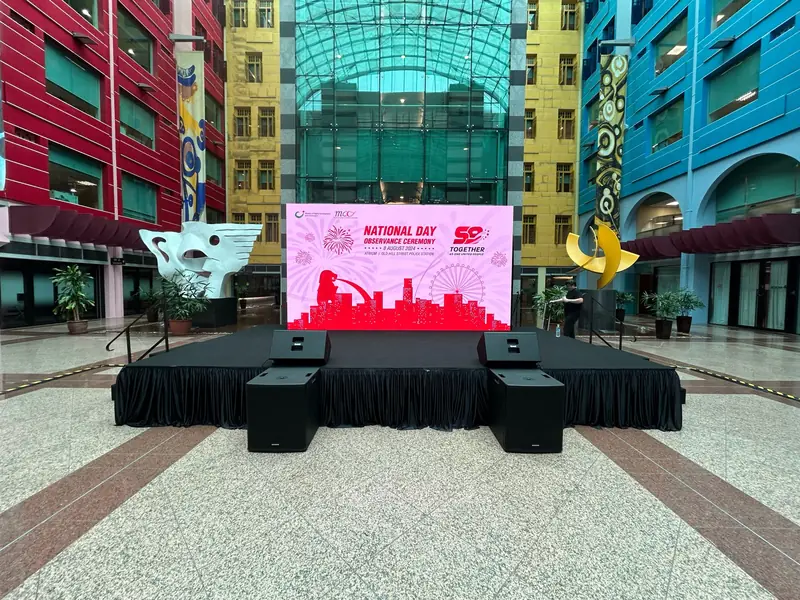
The first question is not what an LED wall costs. It is whether the room needs one at all.
Ambient light decides that. A dim function room with controllable lighting does fine on fast-fold projection at a fraction of the cost, and a bright ballroom or a room with windows does not. If your room can be darkened, start with projection and come back to this only if it cannot.
Pitch follows the front row
Pitch is the distance between pixels, and it is the first thing that moves the price per square metre. It is set by how close the nearest person sits, not by how big the wall is.
- 2.6mm for a low stage where the front row sits within a few metres of the wall.
- 3.9mm is the common ballroom choice: sharp from about four metres back, and cheaper per square metre.
Buying a finer pitch than the room can resolve is spending money on detail nobody present can see. The exception is a camera: a lens sits closer than any guest does, so a wall that is also a backdrop for a recording or a livestream is judged at a shorter distance than the seating plan suggests.
Sizing follows the back row
A wall is built to the room width and the back row sightline. Wider than that and the extra panels are wasted, because nobody is sitting where they would be seen from. The useful check is the same one projection uses: take the distance to the furthest seat and ask whether body text on a slide is legible from there.
What holds it up, and what that costs
Where ceiling rigging points are unavailable, or load rated too low, the wall goes on ground support stacking instead. That is the common answer in Singapore ballrooms and it takes floor area behind the stage, which the seating plan has usually already spent. Rigging versus ground support is one of the things the price moves on, so it is worth settling while the layout can still change.
The build needs the room
Total panel area, pitch, build hours, and whether the room is available the night before are what the quote is actually built from. The last one is the one that catches people: a wall that can be built overnight is a different job from one that has to go up in a four hour window on the morning of the event, with the same panels.
Access matters as much as area. The load-in route, lift dimensions and dock booking decide how long the build takes before anyone touches a panel, which is why we confirm them with the venue in writing rather than on the day.
What goes on it
Panels are built to a pixel count that rarely matches a standard slide size, so artwork is made to the wall rather than scaled to fit it. Agreeing that canvas size early, and telling whoever is designing the holding slides and the show open, avoids a rebuild the night before. Content gets a deck check the day before in any case, with aspect ratio corrected and embedded video tested with its audio.
What to send us
The venue and room, the seating layout, where the nearest and furthest seats are, whether there are cameras, and what the venue will give you for build time. The LED walls and projection page covers the build side, and the equipment list sets the pitches out.
Send the room, the layout and the build window the venue has offered, and we will come back with the wall it supports and what it costs to put up.