Lighting rental in Singapore: faces on camera
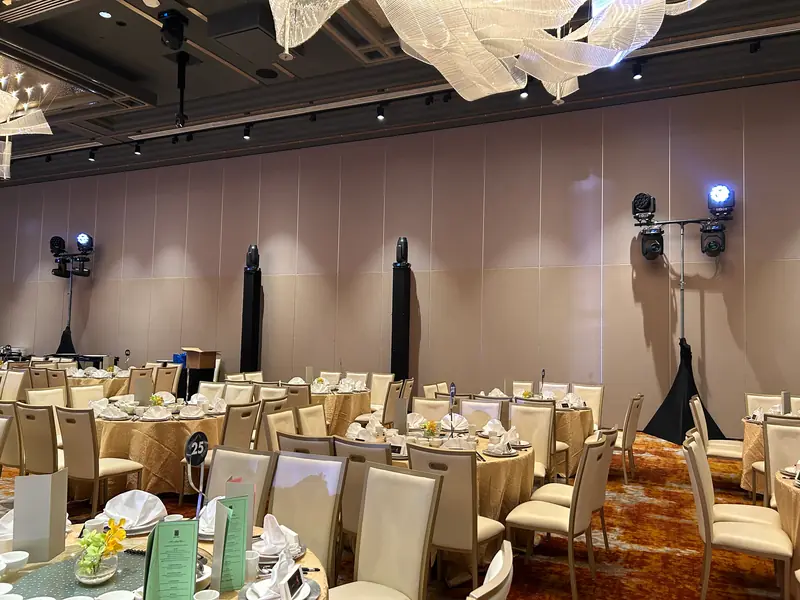
Event lighting gets treated as decoration and budgeted last. Then the recording comes back with the speaker in shadow, and the lighting turns out to have been the thing that decided whether the day was usable afterwards.
Faces have to read on camera. Everything else lighting does is worth having, but that is the part that is not optional.
Stage: the part that is not decoration
Key and fill on the speakers, colour temperature matched to the cameras in the room, and no shadows thrown across the lectern. Even key light is what stops a face going flat or half dark when someone steps forward to take a question.
Colour temperature is the one people miss. A stage lit warm against a room lit cool gives a camera two different whites to choose between, and it will choose wrong somewhere. Matching them is free at the planning stage and expensive to fix in an edit.
Room: what the photographs will show
Uplighting is perimeter fixtures set to a brand colour, and it is the cheapest way to change how a room photographs. A ballroom that looks ordinary under house lights looks like an event with a colour on the walls, for a fraction of what any other change to the room would cost.
Alongside it sit table wash for dinners, and lighting at the entrance and registration, which is where guests form their first impression and where most of the photographs of arrivals get taken.
Moving heads: for the moments that need them
Programmed looks for launches, awards and dinner segments, and room colour changes between parts of the night. They earn their place on an event with distinct segments. On a straight conference they usually do not, and the same money is better spent on the stage wash.
Control: programmed, not parked
Cues are tied to the running order and operated live rather than left on a static state. A room lit for a plated dinner is wrong for an award presentation and wrong again for a speech, and someone has to move it between them. Lighting that is set once and left is the usual reason a room feels flat through the middle of an event.
What moves the price
Fixture count, rigging height, whether truss is needed, and how many programmed looks the show calls for. Rigging height and truss are venue questions as much as lighting ones: where there are no usable ceiling points, fixtures go on stands or on ground supported truss, and that changes both the cost and the floor area the layout has to give up.
Lighting and the screen are one decision
The wash that makes a presenter read on camera is also light in the room, and a screen has to compete with it. On projection that costs contrast, which is a large part of why a brightly lit stage and a projected image pull against each other and why some rooms end up on an LED wall instead. An LED wall makes its own light and does not care.
So the lighting plan and the screen decision are worth making in the same conversation rather than in sequence. If the room is going to be lit properly for cameras, that is a fact the projection specification needs to know about before anyone quotes a projector.
What to send us
The venue and room, the layout, whether the event is being recorded or streamed, and the running order with its segments marked. The event lighting page covers the stage, room and control sides, and the equipment list sets out the fixture types.
Send the room, the running order and whether there will be cameras, and we will come back with a lighting plan and the crew to run it.