Projector screen rental in Singapore
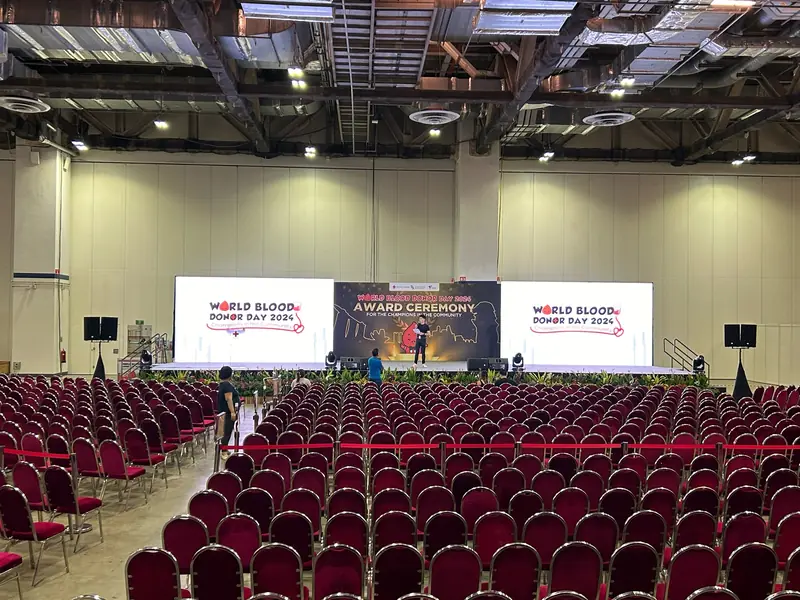
Most enquiries treat the screen as the thing that comes with the projector. It is usually the other way round: the screen is set by the room and the audience, and the projector is then specified to fill it.
Four questions decide it, and none of them is about the projector.
Size follows the furthest seat
A screen is sized to the back row, not to the stage. The check is simple and worth doing physically: stand where the last row of chairs will be and ask whether body text on a slide would be legible from there. A screen that looks generous from the lectern is frequently unreadable from the back tables of a ballroom.
The corollary catches people out too. Once the size is fixed, the height it has to sit at is fixed with it, because heads block the bottom of a screen that has been set too low. In a flat-floor room with round tables, the bottom of the image wants to be above seated eye level, which pushes the whole frame up and sometimes into the ceiling.
A wide room often needs more than one
One screen serves a room that is deeper than it is wide. A wide, shallow hall does not: the blocks of seating on either side end up viewing the image at an angle that makes it hard work, and in a banquet layout some of them are looking at it edge on.
The answer there is two or three screens carrying the same feed, positioned so every block has one roughly in front of it. That changes the quote more than any other single decision, which is why the seating layout matters before the equipment list does.
Front or rear
Front projection is the default and the cheaper option. The projector sits in the room, so the beam crosses the audience, and anyone who walks into it casts a shadow across the slide.
Rear projection puts the projector behind the screen. It hides the throw and keeps presenters out of their own shadow, which matters on any stage where people move, present standing, or take questions from the front. It costs room depth behind the screen, and that depth is usually space the seating plan has already spent, so it is a decision to take while the layout can still move.
The screen the speaker looks at is a different screen
Confidence monitors are downstage displays that let a speaker read their own slides without turning around. They are not a luxury on a stage with a large screen behind it: the alternative is a presenter who spends the session half-facing away from the room, and it reads as unpreparedness rather than as a technical choice.
When a screen is the wrong answer
Ambient light decides this. A dim function room with controllable lighting does fine on fast-fold projection at a fraction of the cost of the alternative. A bright ballroom with chandeliers that will not dim, or a room with windows down one wall, needs an LED wall instead, because an LED wall makes its own light rather than competing with the room's.
Past a certain amount of ambient light, buying a brighter projector stops improving the picture and only raises the price.
What moves the price
Screen size, the number of screens, front against rear, projector brightness, and whether the room can be darkened. Rear projection adds the floor depth and the drape to hide the space behind. See the projector side of the same decision for how throw distance sets the lens, and the equipment list for what sits behind each line.
What to send us
The venue and room name, the seating layout, where the furthest seat is, whether the house lights can be dimmed, and whether anyone will be presenting from the stage rather than the lectern. That is enough to size the screen, decide front or rear, and price the projector against it as one thing.
Send the room and the seating layout, and we will come back with the screen size, how many, and what has to sit behind them.