Roadshow AV in Singapore: one rig, five venues
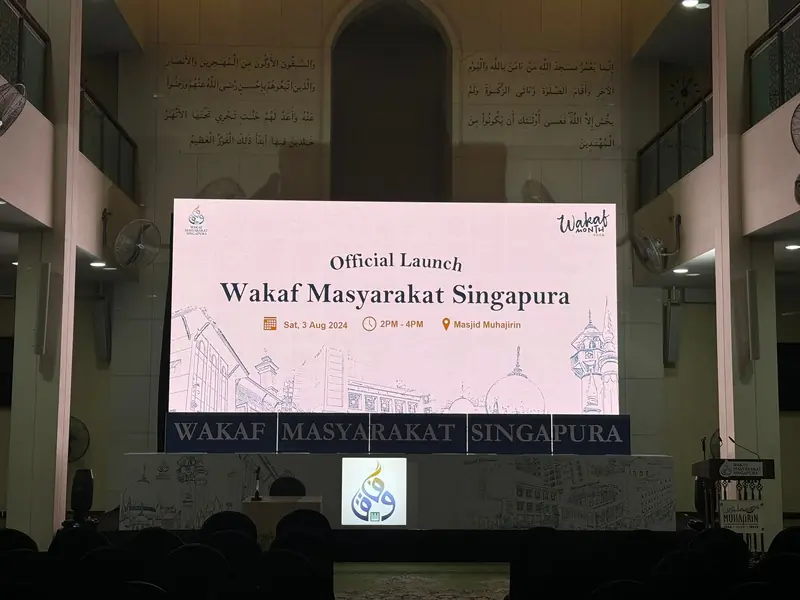
A roadshow is the same event run several times, and almost everything that goes wrong with one comes from a single fact: the show stays the same and the rooms do not.
So the rig is not designed for the first venue. It is designed for the hardest one, and then it is the same rig everywhere.
Design for the worst room
Survey every venue before anything is specified, not just the flagship. The one that decides the kit list is usually not the biggest: it is the one with the lowest ceiling, the worst load-in, the least usable power, or the windows nobody mentioned.
Specifying to the average of five rooms produces a rig that is slightly wrong in all of them. Specifying to the hardest produces one that is slightly generous in four and correct in the fifth, which is the version the audience never notices.
What has to be identical, and what is allowed to flex
- Identical: the content, the running order, the screen aspect ratio, and the look of the stage. A deck built for one aspect ratio and shown at another in venue three is the most common visible failure of a multi-venue run.
- Flexes: speaker positions, delay fills, the rigging method, and how the wall or screen is supported. These are room problems and they get room answers.
The room changes what the same boxes do
Point source covers a meeting room and a ballroom up to a few hundred. A long room needs delay fills so the back half hears the same thing as the front, only slightly later. A carpeted ballroom with a low ceiling absorbs a great deal; a hall with hard floors and glass hands it back late enough to blur speech.
Same speakers, different rooms, different results. This is why the survey matters more on a roadshow than on a one-off: a mistake gets repeated five times.
Ambient light will not be the same twice
One venue will have a ballroom that dims properly, another an atrium with daylight. If any stop on the run cannot be darkened, the screen decision is made for the whole run: an LED wall makes its own light and does not care, whereas projection is at the mercy of whatever the room is doing.
Carrying two different technologies across a run is possible and rarely worth it, because it means two looks, two builds and two sets of content sizes.
Load-in is the schedule
On a single event the load-in window is a constraint. On a roadshow it is the plan. The route, the lift dimensions and the dock booking at each venue decide how much can be built and how early, and those get confirmed with each venue in writing rather than assumed from the first one.
Overruns on multi-venue runs come from access and power, not from the equipment. A venue that gives you four hours on a Tuesday morning is a different build from one that lets you in the night before, with the same truck outside.
The same hands at every stop
Crew continuity is worth more on a roadshow than anywhere else. A team that built the show on Monday knows where the cable runs go and what the client asked to change, and by the third venue the build is quicker for no extra cost. A fresh crew at each stop relearns the show every time, and the client notices.
What to send us
Every venue and room, the dates, the access window each venue has offered, the seating layout at each, and the running order. We will specify one rig against the hardest room and tell you what changes at each stop. See stage, rigging and power for the build side.
Send the venue list and the access windows, and we will come back with one rig specified against the hardest room, and what flexes at each stop.